

Which Radiodetection C.A.T Scanner Is Right for Your Job?
Posted on: 06/07/2026
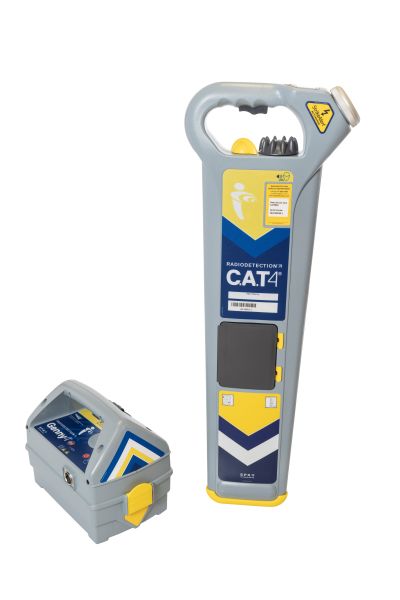
Cable Avoidance Tools, often called C.A.T scanners or CATs, are commonly used to detect underground services before digging. They are also used during routine survey work to help trace service routes and build a clearer picture of what may be below ground.
Radiodetection is a well-known manufacturer of cable avoidance equipment across the UK and Ireland, with the C.A.T4 and Genny4 range designed for locating buried pipes and cables before excavation.
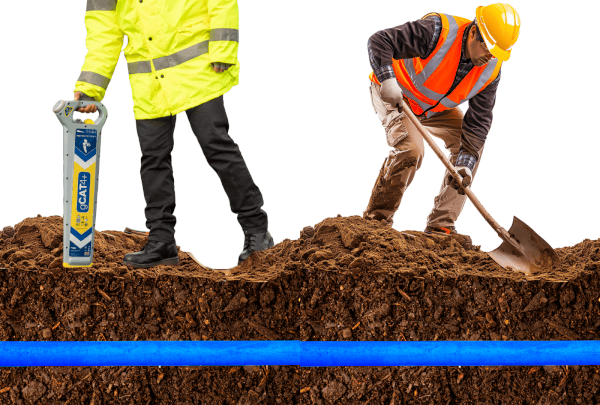
How does a C.A.T scanner work?
A C.A.T scanner helps detect underground conductive services such as power cables, some telecoms cables and metallic pipes. It is commonly used before excavation, trenching, duct installation, drainage works, fencing, roadworks and general ground investigation.
In simple terms, the scanner helps identify signals from buried services so the operator can mark likely service routes
on the ground.
A C.A.T scanner is not a guarantee that every service will be found. Site conditions, service material, depth, signal strength, operator technique and whether a transmitter is used can all affect results. That is why cable avoidance should be part of a wider safe digging process, not a tick-box exercise.

C.A.T4 vs C.A.T4+ vs gC.A.T4+
Radiodetection’s C.A.T4 range includes several model variants. This guide focuses on the three commonly compared options: C.A.T4, C.A.T4+ and gC.A.T4+.
All three models include core locating modes such as Power, Radio, Genny signal locate and Avoidance Mode. Avoidance Mode searches for Power, Radio and Genny signals at the same time, helping speed up pre-dig scanning.
| Feature | C.A.T4 | C.A.T4+ | gC.A.T4+ | What it means |
|---|---|---|---|---|
| Avoidance Mode™ | ✓ | ✓ | ✓ | Searches for Power, Radio and Genny signals at the same time to speed up pre-dig scanning. |
| Genny™ signal locate | ✓ | ✓ | ✓ | Detects locate signals produced by a compatible Genny transmitter. |
| Power signal locate | ✓ | ✓ | ✓ | Detects signals from power transmission networks. |
| Radio signal locate | ✓ | ✓ | ✓ | Detects radio signals that may be re-radiated by buried conductive services. |
| Dynamic Overload Protection | ✓ | ✓ | ✓ | Helps the locator operate in electrically noisy areas. |
| Depth estimation | ✗ | ✓ | ✓ | Provides an on-screen estimated depth reading, typically in metres on UK/Ireland models, when used correctly with a suitable signal. |
| StrikeAlert™ | ✓ | ✓ | ✓ | Warns the operator of shallow buried cables. |
| Service Due Indicator | ✗ | ✗ | ✓ | Helps alert users when the instrument is approaching or beyond its service due date. |
| SWING™ Warning | ✗ | ✗ | ✓ | Warns the operator when poor sweeping technique may affect locate accuracy. |
| CALSafe™ | ✗ | ✗ | ✓ | Can help prevent use of the instrument beyond its calibration or service period. |
| C.A.T operation logging | ✗ | ✗ | ✓ | Adds positional data to the internal logging system |
| Bluetooth® | ✗ | ✗ | ✓ | Bluetooth Low Energy connectivity to Android and iOS devices |
| GPS/GNSS | ✗ | ✗ | ✓ | Built in Data logging and GPS/GNSS receiver enables usage and location analysis and reporting |
| C.A.T Manager PC support | ✓ | ✓ | ✓ | Allows compatible device management and reporting through C.A.T Manager software. |
| C.A.T Manager mobile app support | ✗ | ✗ | ✓ | Supports mobile app integration for compatible gC.A.T models. |
Choosing the Right Model
The right C.A.T scanner depends on how you plan to use it.
For a small contractor doing occasional shallow excavation, a basic avoidance tool may be enough. For surveyors, utility contractors or companies working across multiple sites, extra features such as depth estimation, data logging, GPS/GNSS and calibration controls can be much more valuable.
The main question is not “Which model has the most features?”
It is: What level of information, control and reporting does your work actually need?
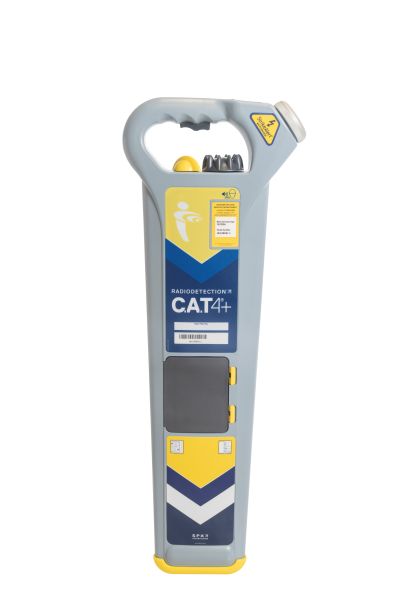 C.A.T4: Best for Basic Cable Avoidance Sweeps
The C.A.T4 is the simplest option in this comparison. It is best suited to users who mainly need to sweep an area before or during excavation.
It includes the key locating modes needed for basic avoidance work, including Power, Radio, Genny and Avoidance Mode. It also includes safety-focused features such as StrikeAlert and Dynamic Overload Protection.
Choose the C.A.T4 if:
- you mainly need a practical pre-dig sweep
- you do not need depth estimation
- you are not managing detailed usage logs
- you want a straightforward cable avoidance tool for basic site work
For example, a small groundworks team opening trial holes or carrying out shallow excavation may find the C.A.T4 suitable, provided operators are trained and the equipment is used as part of a proper safe digging process.
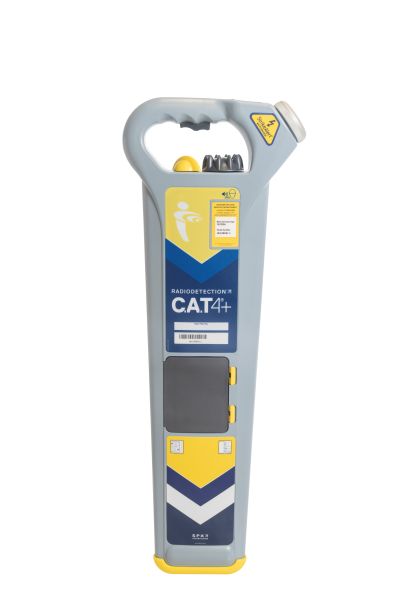 C.A.T4+: Best When You Need Depth Estimation
The C.A.T4+ includes the core features of the C.A.T4 but adds depth estimation.
That extra feature can be useful when locating buried utilities as part of a routine survey or when planning excavation around suspected service routes. Depth information can help teams make better decisions on digging method, sequencing and risk.
However, it is important to be careful with how depth is understood. Depth readings should be treated as an estimate, not an excavation guarantee. Radiodetection’s guidance links depth display to supported locating functions and model features, so operators should understand the correct method before relying on readings.
Depth estimation is only possible when used in conjunction with a 33kHz signal, be it from a Genny, sonde, or tracing reel.
Choose the C.A.T4+ if:
- you need more than a basic avoidance sweep
- you want depth estimation when locating utilities
- you carry out routine service tracing or survey work
- you need practical information to support excavation planning
For many contractors and survey teams, the C.A.T4+ is the middle-ground option. It gives more information than the standard C.A.T4 without moving into full data logging and GPS functionality.
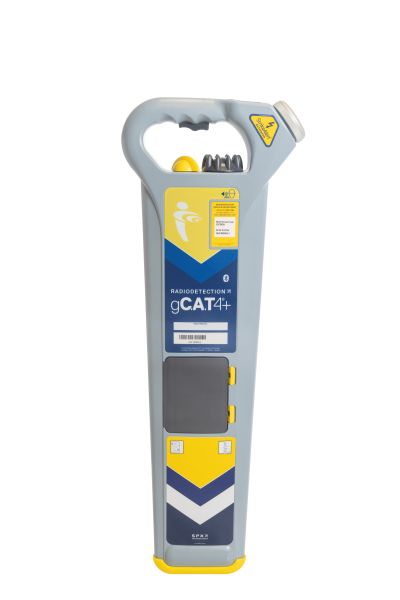 gC.A.T4+: Best for Contractors, Survey Teams and Quality Records
The gC.A.T4+ is the most feature-rich option in this comparison. It is generally the strongest choice for utilities contractors, larger groundworks teams, survey companies and businesses that need better records of equipment use across multiple sites.
The gC.A.T4 range includes GPS/GNSS functionality, which adds positional data to the internal logging system. Radiodetection explains that gC.A.T4 models use an internal GPS/GNSS receiver to add positional data to log records.
It also supports Bluetooth connectivity and mobile app integration, allowing usage data to be transferred to C.A.T Manager systems. Radiodetection describes C.A.T Manager Online as a cloud-based system for near real-time usage monitoring of gC.A.T4 and Genny4 fleets.
Choose the gC.A.T4+ if:
- you work across multiple sites
- you need usage logs and positional records
- you manage teams or equipment fleets
- you want better visibility of how equipment is being used
- calibration and service due controls matter to your quality process
- you need stronger audit trails for internal or client requirements
For contractors working under stricter quality, safety or client reporting expectations, the gC.A.T4+ is often the better long-term choice.
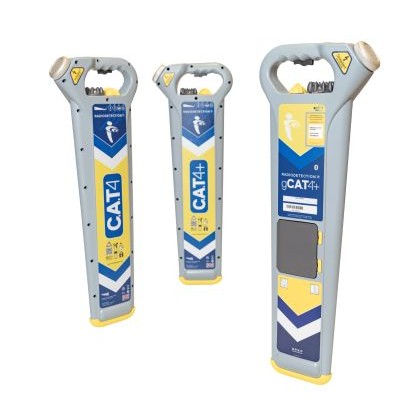 Which C.A.T Scanner Should You Choose?
Here is the practical answer.
Choose the C.A.T4 if you need basic avoidance
The C.A.T4 is suitable where the main requirement is scanning before excavation. It is a sensible option for basic site checks, but it does not give depth estimation or advanced reporting features.
Choose the C.A.T4+ if you need depth information
The C.A.T4+ is a better choice where you want to locate and trace services with more confidence. The depth estimation feature can help with planning, but it should always be treated as an estimate and checked against safe digging practice.
Choose the gC.A.T4+ if you need records, GPS and management features
The gC.A.T4+ is the best option where utility locating is part of regular site operations, survey work or contractor management. GPS/GNSS, Bluetooth, data logging and calibration management features make it more suitable for businesses that need traceability.