

Dropped Your Laser Level? How to Check It’s Still Accurate
 Laser levels are built for demanding construction sites, but accidents happen.
A laser gets knocked off its tripod, dropped in the van or takes a hard hit on site.
It might still switch on, self-level and produce a perfectly normal-looking beam.
But does that mean it’s still accurate?
Not necessarily.
A significant impact can affect a laser level’s accuracy without causing obvious external damage.
When you’re using a laser for groundworks, drainage, foundations or setting out, even a small error can lead to costly mistakes.
Here’s what to check before putting your laser back to work.
What should you do immediately after dropping a laser level?
Before continuing work, check the instrument for damage and unusual behaviour.
 Quick check after a fall:
- Inspect the housing for cracks or impact damage.
- Check the laser windows for cracks or damage.
- Look for loose components or unusual rattling.
- Check the battery compartment and controls.
- Switch the laser on and look for warnings or error messages.
- Check self-levelling and normal operation.
- Verify accuracy before using it for critical work.
A laser that switches on and self-levels is not necessarily accurate.
If you notice visible damage, unusual noises, problems with self-levelling or irregular rotation on a rotary laser, have the instrument inspected before relying on it.
Important: A working laser is not necessarily an accurate laser.
After a significant impact, the instrument may still produce a beam even if its measurements are outside the manufacturer’s stated tolerance.
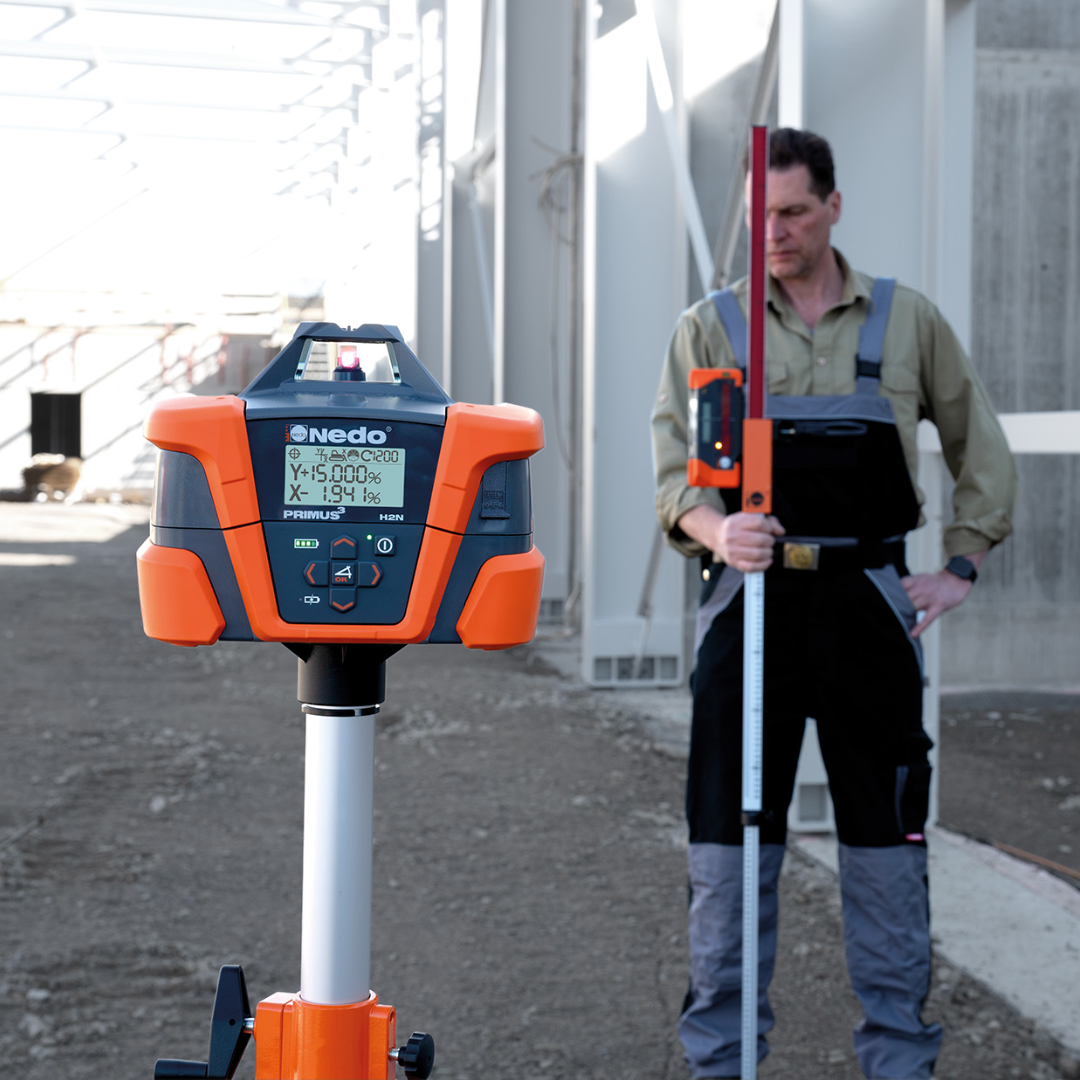 How to check laser level accuracy using the two-peg test
For a compatible rotary laser level, one way to check levelling accuracy is to carry out a two-peg test.
This involves comparing height readings between two fixed points, first with the instrument positioned halfway between them and then closer to one end.
The comparison can help identify an error that increases with distance.
Always follow the manufacturer’s recommended accuracy-checking procedure where available.
What equipment do you need?
- Rotary laser level
- Stable tripod
- Compatible laser receiver
- Levelling staff
- Two clearly marked reference points
- Suitable means of measuring the test distance
Step 1: Set out two reference points
Choose two stable points on reasonably firm ground, approximately 30–60 metres apart, provided this is appropriate for your instrument and the manufacturer’s instructions.
Mark them as Point A and Point B.
Step 2: Position the laser halfway between the points
Set up your rotary laser on a stable tripod approximately halfway between Points A and B.
Allow it to self-level.
Use the receiver and staff to take a height reading at each point.
Record both readings and calculate the difference between them.
This gives you a reference height difference to compare against the second set of readings.
Step 3: Move the laser closer to Point A
Reposition the laser approximately 1–2 metres from Point A, where appropriate for the manufacturer’s procedure.
Allow the instrument to self-level again.
Take another reading at Point A, followed by a reading at Point B.
Record both measurements.
Step 4: Compare the results
Calculate the height difference between the readings taken from the second position.
Compare this with the reference height difference recorded when the laser was halfway between the points.
If the differences agree within the manufacturer’s applicable tolerance, the instrument has passed that part of the check.
If the discrepancy exceeds the permitted tolerance, the laser may need professional inspection or adjustment.
A two-peg comparison is not a complete calibration.
Rotary laser manufacturers may require additional checks in different orientations or along different axes.
Follow the full checking procedure specified for your model before deciding that the instrument is within tolerance.
How do you know if your laser level has failed the accuracy check?
There is no single acceptable tolerance for every laser level.
Accuracy specifications vary between manufacturers and models, and the permitted difference depends on the instrument and the distance being tested.
Compare your results against the manufacturer’s stated tolerance.
If the readings fall outside that tolerance, stop relying on the instrument for accuracy-critical work until it has been checked.
| What you notice | What it means for your next step |
|---|---|
| The laser switches on and self-levels normally | Operation alone does not confirm accuracy. Complete the appropriate accuracy check. |
| Readings agree within the applicable tolerance | The instrument has passed the checks performed. Complete any remaining manufacturer-required checks. |
| Readings exceed the permitted tolerance | Do not rely on the laser for critical work. Arrange professional inspection. |
| The laser struggles to self-level | Stop using it for accurate measurements and have it inspected. |
| The housing or laser window is damaged | Have the instrument checked before returning it to service. |
| You cannot establish a reliable result | Do not assume the laser is accurate. Repeat the approved check or seek professional advice. |
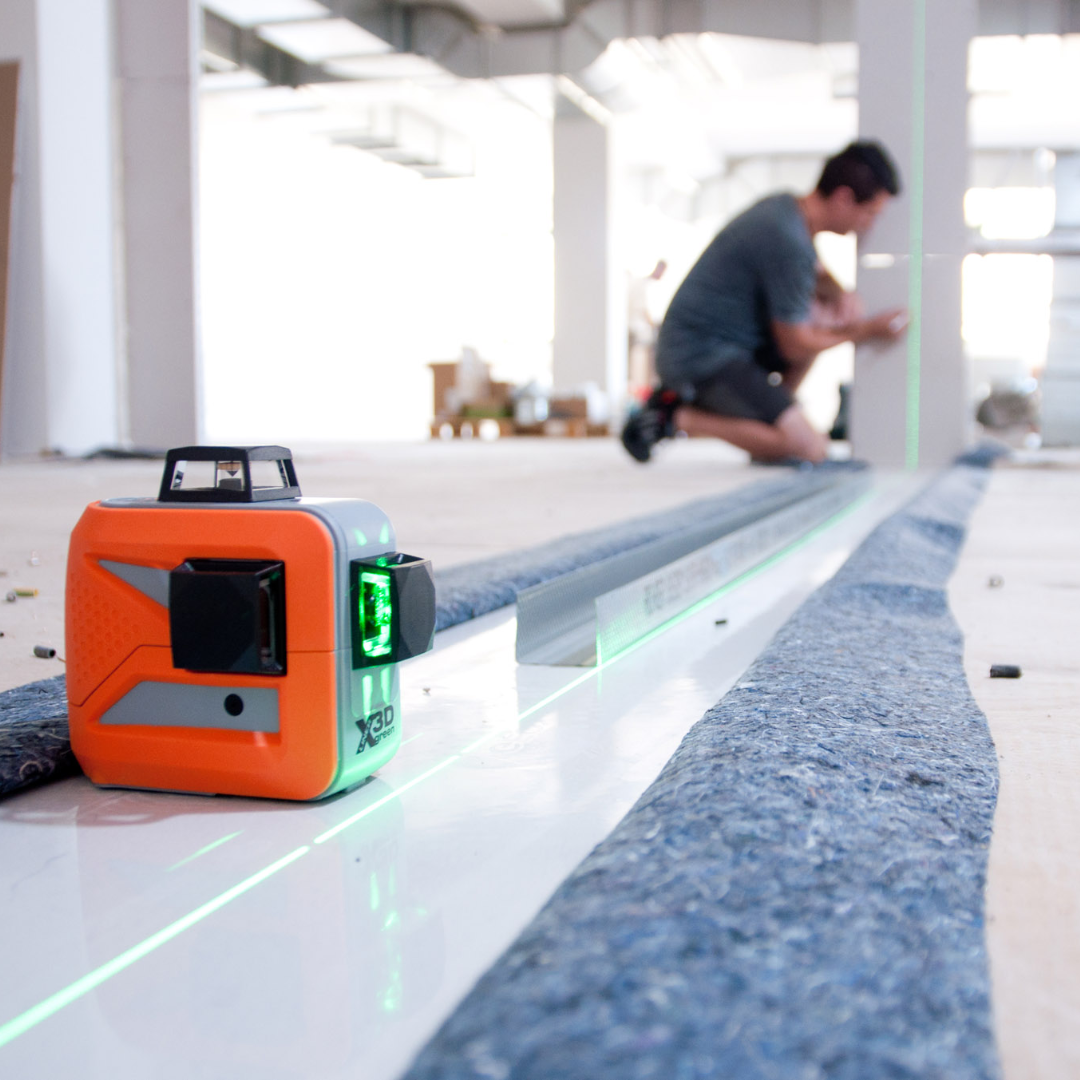 What about line and cross-line lasers?
Line and cross-line lasers can also lose accuracy following an impact, even when they continue producing a visible beam.
However, their checking procedures differ from those used for rotary lasers.
Depending on the model, the manufacturer may specify separate horizontal and vertical accuracy checks using walls, reference marks or other suitable surfaces.
Use the procedure provided for your particular instrument rather than assuming the rotary laser two-peg method is suitable.
Can a line laser be inaccurate even if the lines look straight?
Yes.
A visible line may appear normal even when its position is outside the manufacturer’s specified accuracy tolerance.
Use the recommended horizontal and vertical checking procedures for your model.
Does a laser passing one accuracy check mean every axis is correct?
Not necessarily.
Some rotary lasers require checks in multiple orientations or along different axes.
A single comparison may identify a problem, but it does not necessarily confirm accuracy in every direction.
Refer to the manufacturer’s complete procedure.
Can you recalibrate a laser level yourself?
There is an important difference between checking accuracy and calibrating or adjusting an instrument.
An on-site accuracy check helps establish whether your laser appears to be operating within its specified tolerance.
Calibration involves comparing measurements against appropriate reference standards. Adjustment is the process of correcting an instrument when necessary.
Some manufacturers provide user adjustment procedures. Other instruments require specialist equipment and technical expertise.
Unless the manufacturer specifically provides an adjustment procedure intended for users, avoid opening or altering the instrument yourself.
When should you arrange a professional accuracy check?
Consider professional inspection when:
- The laser has suffered a substantial fall or impact.
- It fails an on-site accuracy check.
- Measurements disagree with a trusted reference.
- It struggles to self-level or behaves unusually.
- There is visible physical damage.
- You are unsure whether it remains within specification.
For critical setting-out work, also follow the manufacturer’s recommendations and any project-specific quality requirements.
Why can a small laser accuracy error cause bigger problems?
An error that seems small close to the instrument can become more significant over a longer working distance.
That matters when establishing levels for foundations, drainage, excavation, concrete work and other accuracy-critical tasks.
Discovering an error after work has been completed can mean delays, remedial work and additional cost.
How to protect your laser level from knocks and falls
Accidents cannot always be avoided, but a few basic precautions can help protect your equipment.
- Secure the tripod: Check that the laser and mounting bracket are properly attached.
- Check stability: Take extra care on soft or uneven ground.
- Avoid site traffic: Keep the instrument away from moving vehicles and machinery.
- Use the protective case: Store and transport the laser correctly.
- Secure equipment in vehicles: Do not leave a laser loose in the van.
- Inspect accessories: Check tripods, mounts and cases for damage.
And if your laser does take a significant knock, check its accuracy before continuing with critical work.
 Don't let a dropped laser turn into a costly mistake
Professional laser levels are designed for demanding construction environments, but they are still precision measuring instruments.
If your laser has taken a hard knock, do not assume it is accurate simply because it still works.
Inspect it, complete the appropriate accuracy checks and compare the results with the manufacturer’s specification.
If the laser fails those checks, or you are uncertain about the result, have it professionally inspected before relying on it again.
A few minutes spent checking your laser could prevent costly setting-out errors and unnecessary rework.
Frequently Asked Questions
Can dropping a laser level affect its accuracy?
Yes. A significant impact can affect a laser level’s accuracy even if there is no visible damage.
Check the instrument against the manufacturer’s accuracy specification before relying on it again.
My laser still self-levels after being dropped. Is it accurate?
Not necessarily.
Self-levelling does not guarantee that the projected beam remains within the manufacturer’s accuracy tolerance.
What is a two-peg test?
A two-peg test compares height differences between two fixed points from different instrument positions.
It can help identify levelling errors that increase with distance.
Should a laser level be calibrated after being dropped?
After a significant impact, its accuracy should be checked.
Whether professional calibration, adjustment or repair is required depends on the results and the instrument’s condition.
Can I calibrate a laser level myself?
You may be able to check its accuracy using the manufacturer’s procedure.
Adjustment or repair may require specialist equipment and technical expertise.
How often should I check my laser level’s accuracy?
Follow the manufacturer’s guidance and any project-specific requirements.
Additional checks are sensible after significant impacts, unusual operation or whenever accuracy is in doubt.
Need your laser level checked after a fall?
If your laser has been dropped, is behaving unusually or has failed an accuracy check, Design & Survey can inspect and test the equipment and advise whether adjustment, calibration or repair is required.